
Serving Naperville, Chicago, Aurora and beyond
Serving Naperville, Chicago, Aurora and beyond

Water Pooling on Concrete
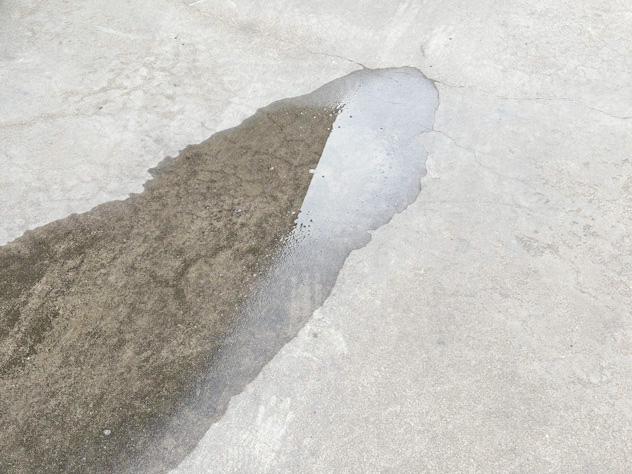
Water pooling on concrete is more than an inconvenience. Standing water on driveways, sidewalks, patios, pool decks, and other concrete surfaces can make these areas harder to use and create slippery conditions. It can also allow moisture to repeatedly reach cracks, joints, and nearby structures.
Water often collects when a concrete slab settles, shifts, or develops low areas that interfere with proper drainage. Poor grading, runoff, and changes in the soil beneath the slab can also contribute to the problem.
Chicago Basement Systems provides professional concrete repair and leveling throughout Greater Chicago & Northwest Indiana, including Naperville, Chicago, Aurora, and nearby. We can evaluate your concrete, identify factors contributing to poor drainage, and determine whether settlement is part of the problem.
Exterior concrete is poured with a slight pitch to direct rainwater away from structures and toward proper drainage areas. When a slab loses its support base and settles, that slope changes, creating low spots where water collects instead of draining away.
While settlement is often the cause of pooling water on concrete, improper grading, misdirected downspouts, water runoff, and the surrounding drainage conditions can also impact how water moves across and around a concrete surface.
Because several conditions can contribute to concrete drainage problems, identifying the source is an important first step in determining how to address the affected area.
A small puddle may not seem urgent, but recurring standing water on concrete can create additional problems over time. Areas that stay wet can become slick, difficult to use, and more vulnerable to changing weather conditions.
When concrete slabs sink or shift, water collects in low spots rather than running off as intended. This movement can impact drainage in several areas of your property.
If water has recently started collecting on a concrete surface that previously drained well, changes in the slab's elevation may be contributing to the problem.
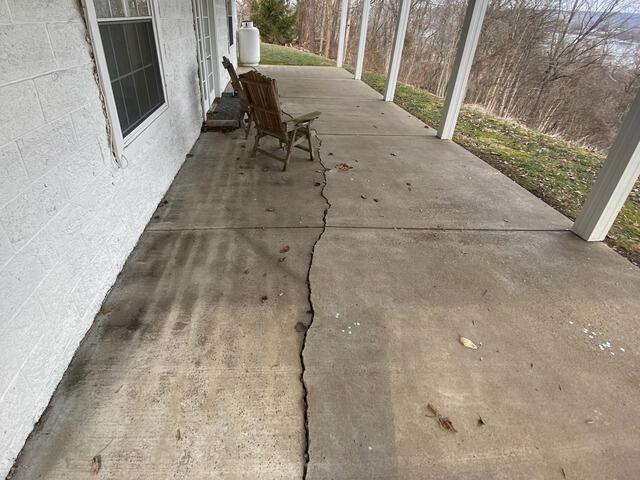
Concrete next to a foundation, garage, or other structure should help direct water away from the building. When the slope changes, runoff may instead travel toward the structure or collect along the edge of the slab.
This can be especially noticeable around driveways, garage entrances, patios, and walkways. Water may collect near doors and entryways or linger near the foundation after rain.
But not every drainage problem is caused by concrete settlement. Yard grading, downspouts, drains, landscaping, and other conditions can also affect where water goes. Evaluating the surrounding property can help determine whether the concrete itself is contributing to the problem.
Standing water alone does not necessarily mean a concrete slab has settled. Other surface changes can provide additional clues that the slab's elevation may be affecting drainage.
If you notice several of these conditions together, a professional concrete inspection can help determine whether settlement is contributing to the drainage problem.
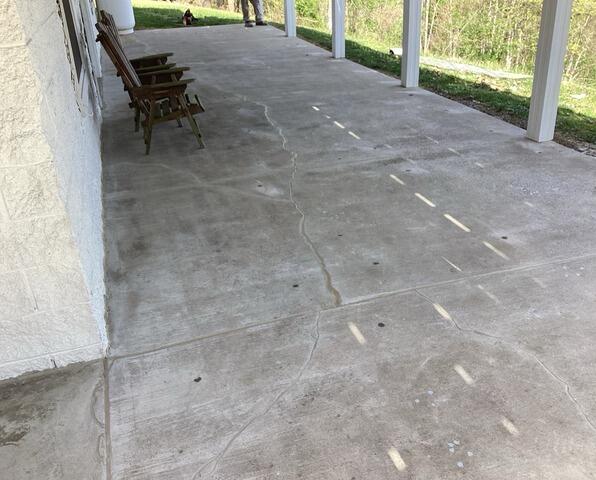
The right approach depends on why water is collecting. If grading, downspouts, or another drainage issue is responsible, correcting the concrete alone may not resolve the problem. If settlement has created a low spot or changed the slope of the slab, concrete leveling may be an appropriate solution.
Concrete leveling is designed to raise and stabilize settled slabs without removing and replacing concrete that is otherwise in good condition. Correcting the elevation can help restore proper surface slope when settlement contributes to poor drainage.
Chicago Basement Systems uses structural polyurethane foam to lift and stabilize settled concrete. The material is installed beneath the slab to fill voids, restore support, and carefully raise affected areas.
Determining why water is pooling requires looking beyond the puddle itself. At Chicago Basement Systems, we evaluate the concrete's condition and elevation, and the surrounding drainage conditions, to identify factors contributing to the problem.
If settlement is involved, we can recommend a concrete leveling solution based on the condition of the slab and the needs of your property. If other drainage conditions are contributing, identifying them during the evaluation can help provide a clearer picture of the problem.
The goal is to address the conditions contributing to poor drainage, not simply the standing water you can see.
Concrete settles when the soil underneath it shifts, washes away, or wasn't compacted properly. This creates empty spaces beneath the slab that can cause it to sink and become uneven.
Yes. When a concrete slab settles, it can change the surface slope and create low areas where water collects. Settlement can also cause runoff to travel toward a home, garage, or other area instead of draining away.
If the area previously drained properly, settlement or changes in surrounding grading and drainage may have altered how water moves across the surface. A concrete inspection can help identify whether the slab has shifted or developed a low area.
Recurring standing water can create slippery surfaces and allow moisture to reach cracks and joints. In cold weather, pooled water can also freeze and create icy conditions. Water reaching the soil around or beneath a slab may contribute to erosion and additional settlement.
Concrete leveling may help when settlement has created a low spot or changed the slope of the slab. However, water pooling can also be caused by grading, downspouts, runoff, or other drainage conditions. Evaluate the affected area to determine what is contributing to the problem.
Not necessarily. If the concrete is still in good condition but has settled, concrete leveling may raise and stabilize the slab without full replacement. The condition of the concrete and cause of the drainage problem will determine which approach is appropriate.
You shouldn't have to deal with standing water every time it rains. Chicago Basement Systems helps home and business owners identify and address concrete settlement and drainage problems.
We'll evaluate the affected concrete, look for signs of settlement, and determine whether concrete leveling is an appropriate solution for your property. We serve properties throughout Greater Chicago & Northwest Indiana, including Chicago, Naperville, Aurora, Mokena, Shorewood, Bolingbrook, Kankakee, Joliet, Cedar Lake, Crown Point, and the surrounding communities.
Address uneven concrete before poor drainage becomes a recurring problem. Schedule a free estimate today to get started.
Looking for a price? Get a no cost, no obligation free estimate.
our service area